How to play Joker
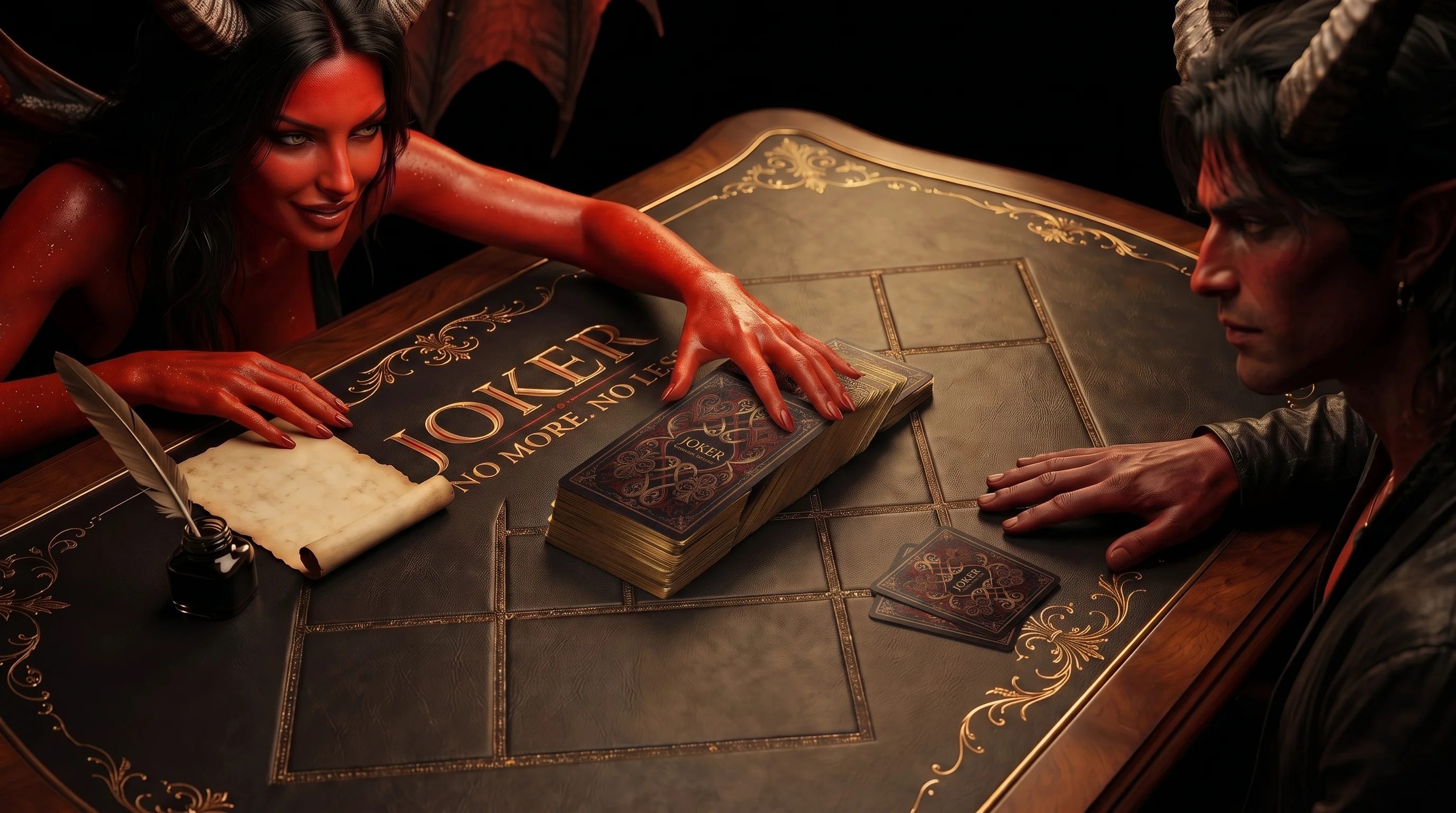
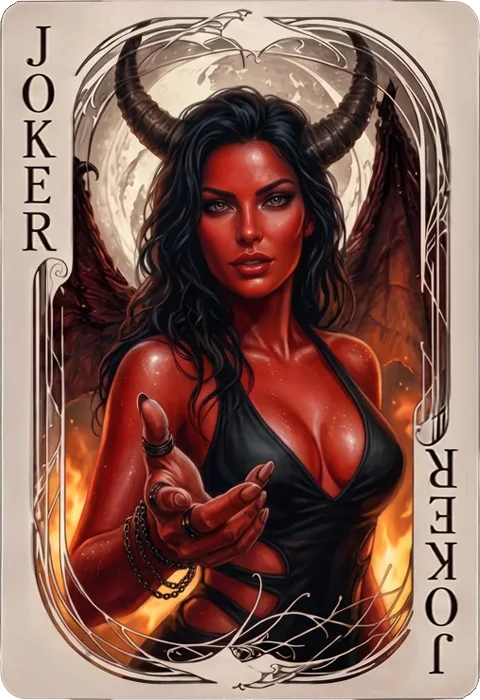
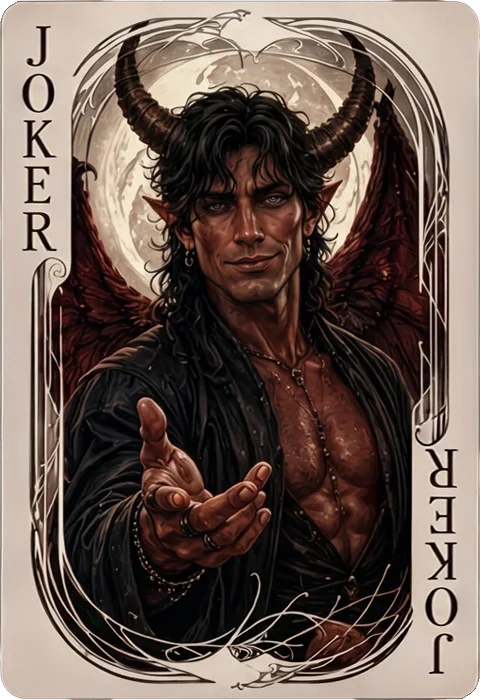
The full rules live in the app with an interactive tutorial run by Lilith and Noll — this is the shape of the game in seven paragraphs.
The deck
Joker is a trick-taking card game from Georgia for exactly four players, each playing for themselves. The deck is 36 cards — six through ace in every suit — with one twist: the six of spades and the six of clubs are replaced by two jokers. Within a suit the cards rank from ace down to six. The jokers stand outside that ladder: not trumps, but wild cards with rules of their own.
The game
A full game is 24 hands played in four chapters. In the first chapter the deals grow from one card to eight; the second is four hands of nine cards — the nines; the third shrinks from eight back to one; the fourth is nines again. Every hand begins with a full shuffle. In hands of one to eight cards the top card of the remaining deck is turned face up and its suit is trump — a revealed joker means no trump. In the nines every player first gets three cards, and the player after the dealer names the trump, any suit or none, before the remaining six are dealt.
Bidding
Once trump is known, players bid in turn, beginning with the player after the dealer. A bid is a promise of the exact number of tricks you will take — from zero, a pass, up to every trick in the hand. All bids are public. One restriction keeps the table honest: the dealer bids last and may not name the number that would make all four bids add up exactly to the number of tricks. Someone at the table is always wrong, and that is the point.
Playing tricks
The player after the dealer leads the first trick; whoever wins a trick leads the next. You must follow the suit that was led. If you have none of it, you must play a trump. Only when you hold neither may you discard freely. Beating the strongest card on the table is never required — an exact pass, feeding a trick to an opponent who does not want it, is half of the craft.
The joker
A joker can be thrown into any trick as “take” — it beats everything, including the trump ace — or as “dump”, a clean discard. Leading with a joker, you name a suit and a demand. “Highest” forces every opponent to play their top card of that suit and the joker takes the trick — a favourite way to hunt trumps and aces. “Give away” makes the joker the lowest card of the suit and hands the trick to the strongest response. When two jokers meet in one trick, the later one is always free to take or to yield.
Scoring
Keep your word and the contract pays: a made bid earns 50 points plus 50 per promised trick — bid three, take exactly three, score 200. A kept pass is worth 50. Bid every trick of the hand and take them all, and each is worth 100 — a clean nine pays 900. Miss your number in either direction and each trick you took is worth a token 10 points. Bid at least one and take none, and Lilith records a shtanga with one hard pen stroke: minus 100, minus 200, or minus 100 per card of the deal — whichever penalty the table agreed on.
Premiums and extra chapters
Keep every promise in a chapter and its closing ceremony rewards you: your best score of the chapter is doubled — or, at crueller tables, the best entries of everyone who failed are struck out. After the 24th hand a unanimous table can keep playing: no-trump chapters; dark hands, bid before you have seen a single card; gold hands, where every trick is simply worth 100; and misère, where every trick costs 100 — unless you take all nine and flip the hand into plus 900. The whole game is written on one bone sheet, and the sheet decides: the highest total after the last chapter takes the table.